Categories
Uncategorized

Up in the Air: Aerial Survey with Fragmented Heritage

drone
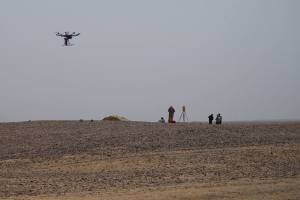
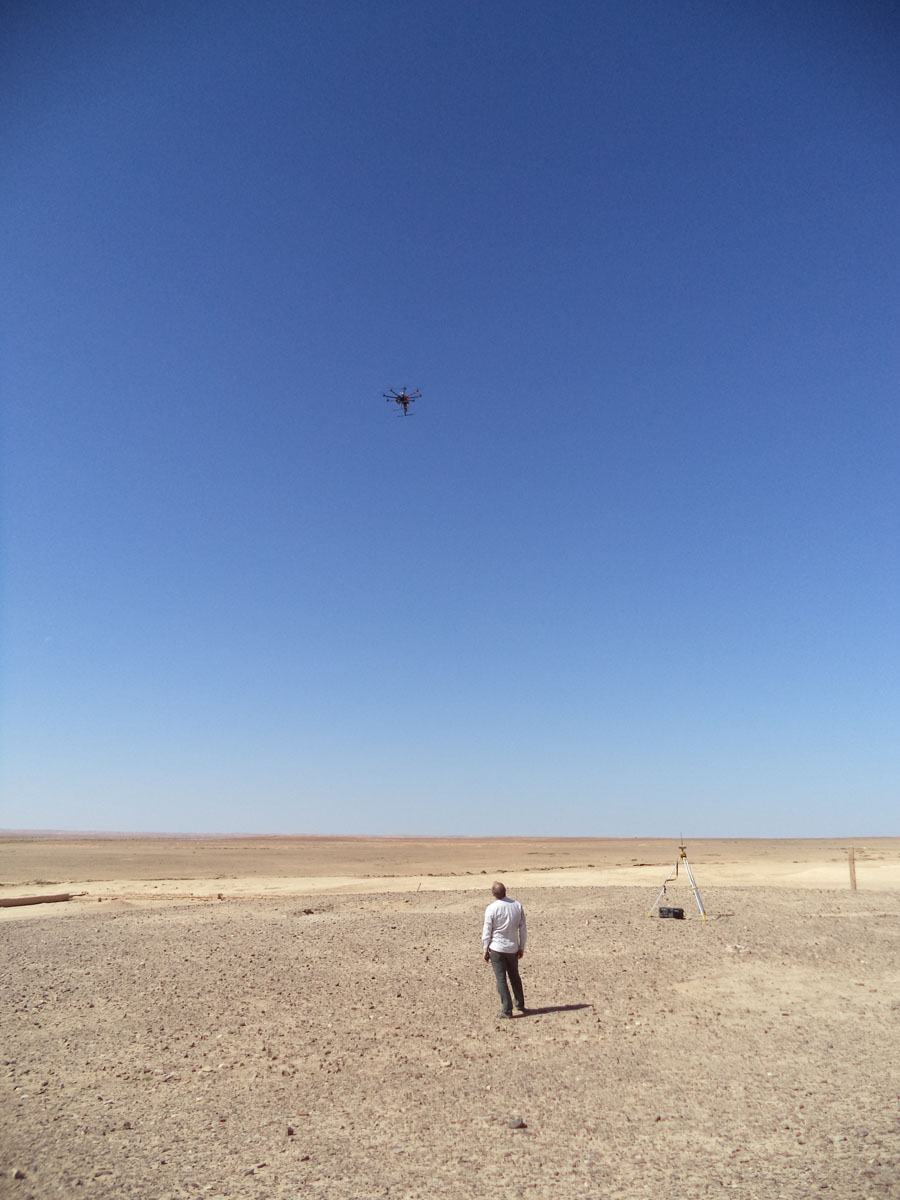
The octocopter in action

We were thrilled this year to welcome members of the Fragmented Heritage Project (Website) to Kharaneh IV. Adrian and Tom joined us to conduct an aerial and terrestrial survey of the site and surrounding wadis through multiple technologies. They used an octocopter to capture high-resolution images of the site’s surface, a kite to capture images at higher altitudes, and a laser scanner to create a three-dimensional model of Kharaneh IV. We hope that through these images we can gain a better understanding of the distribution of surface artifacts (of which there are millions!) and identify whether the site surface is changing over time. As well, through the kite photography we are able to monitor changes to the courses of nearby wadis (river valleys). This is important to understand whether the rivers are coming closer to the site to protect against potential damage in the future. We look forward to having them return next year to continue their work at the site.

Tom with kites
Tom with the kite.

We allocated one of the Kharaneh IV crew members, Olivia, to help Adrian and Tom survey the site. She had the opportunity to use the octocopter, learn how to set up the laser scanner, and now is using a camera on a pole to finish capturing the site with high resolution images. Olivia has written up some of her experiences of working with aerial survey equipment at Kharaneh IV.
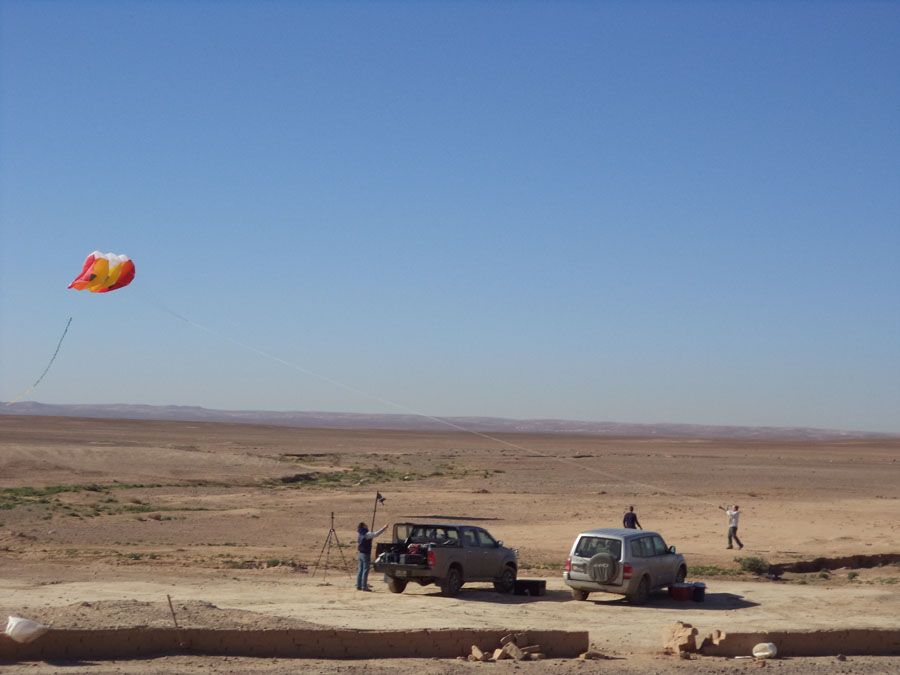
kite
Flying a kite at work.

Perspective from the Crew: Guest Post by Olivia Mavrinac

Olivia with pole
Olivia’s high tech camera set up.

The other week I had the pleasure of joining the Fragmented Heritage team consisting of Adrian and Tom (dubbed the Nerd Squad). They introduced me to laser scanners, octocopters, GPS’s, high voltage batteries, and the wonderful world of technical gadgets. I was quickly promoted to battery girl, with the important task of making sure that the little beetle in the sky (the octocopter) had enough energy for its flight across the area. Tom showed me the quickest way to set up a tripod, which we both agreed was the best and only way. On their last day, it was decided that I needed a new job. They tied me to a camera attached to a 3 m long pole. I became a portable tripod. This was super awkward, but everybody had lots of fun seeing me walk around with it, so it made the weight much lighter. And they let me use the google glasses, so I shouldn’t complain! Sadly the masters of technology had to go back to warm showers and real coffee, leaving me with unfinished training, but I have a feeling that I will see them in the sequel next year: The Nerd Squad, part II. Drone/Pole Spice signing off (Olivia)
Categories
Uncategorized

One Week to Go!

DSC00091
excavations continue

We are now nearing the end of our field season, with only one week to go! The time has been passing incredibly quickly, with everyone busy working in the lab or in the field each day. On site we are still chasing the edges of Structure 2, sometimes thwarted by rodent burrows. I hope that by early next week we will have a better sense of where the boundaries of the structure are so that we have time to map the surface. Some interesting artifacts are already beginning to appear; we have several horn cores (perhaps gazelle?) lying within the deposit, included some articulated burnt horn cores.

gazelle horn cores
burnt gazelle horn cores

We also continued to work on the high resolution photography of the site, using the camera pole to capture the artifacts on the surface. Next week we will finish this photography so that the entire surface of the site has been photographed.

This Friday, our day off, we decided to stay in Azraq to relax. Some of us have gone to Jerash for the day, others are working, and some are just relaxing in the sun with the puppy. Hopefully we will all be recharged for our final week of excavations next week!

Perspectives from the Crew: Guest Post by Joe Roe (http://joeroe.eu/blog)

I spent last week digging a hole with a spoon. Really.
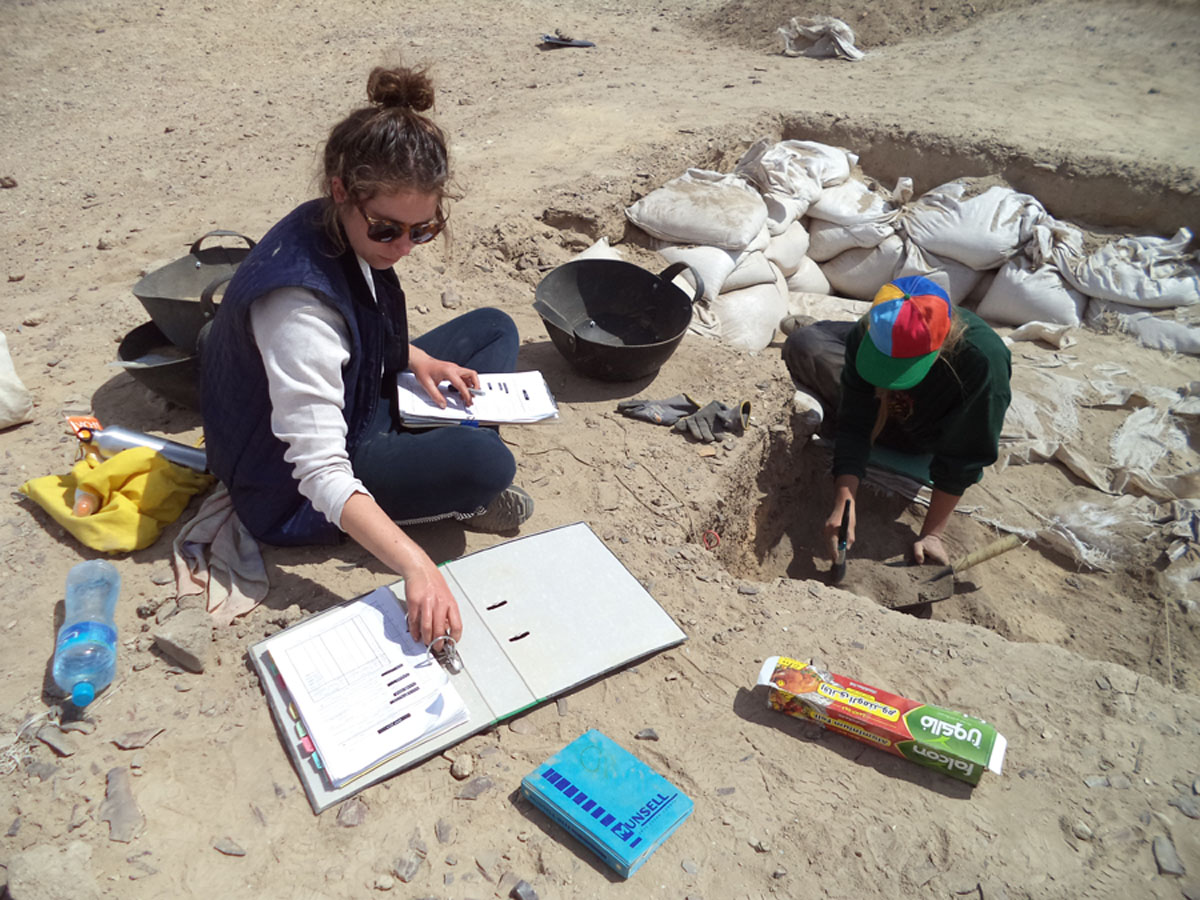
This is my first season at Kharaneh IV. Over the last three weeks I’ve been helping out both on site and in the lab. Last week, I was excavating, and the biggest difference between digging here and other sites I’ve worked at — from later periods — is its meticulous pace.
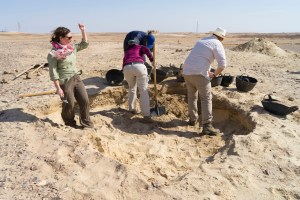
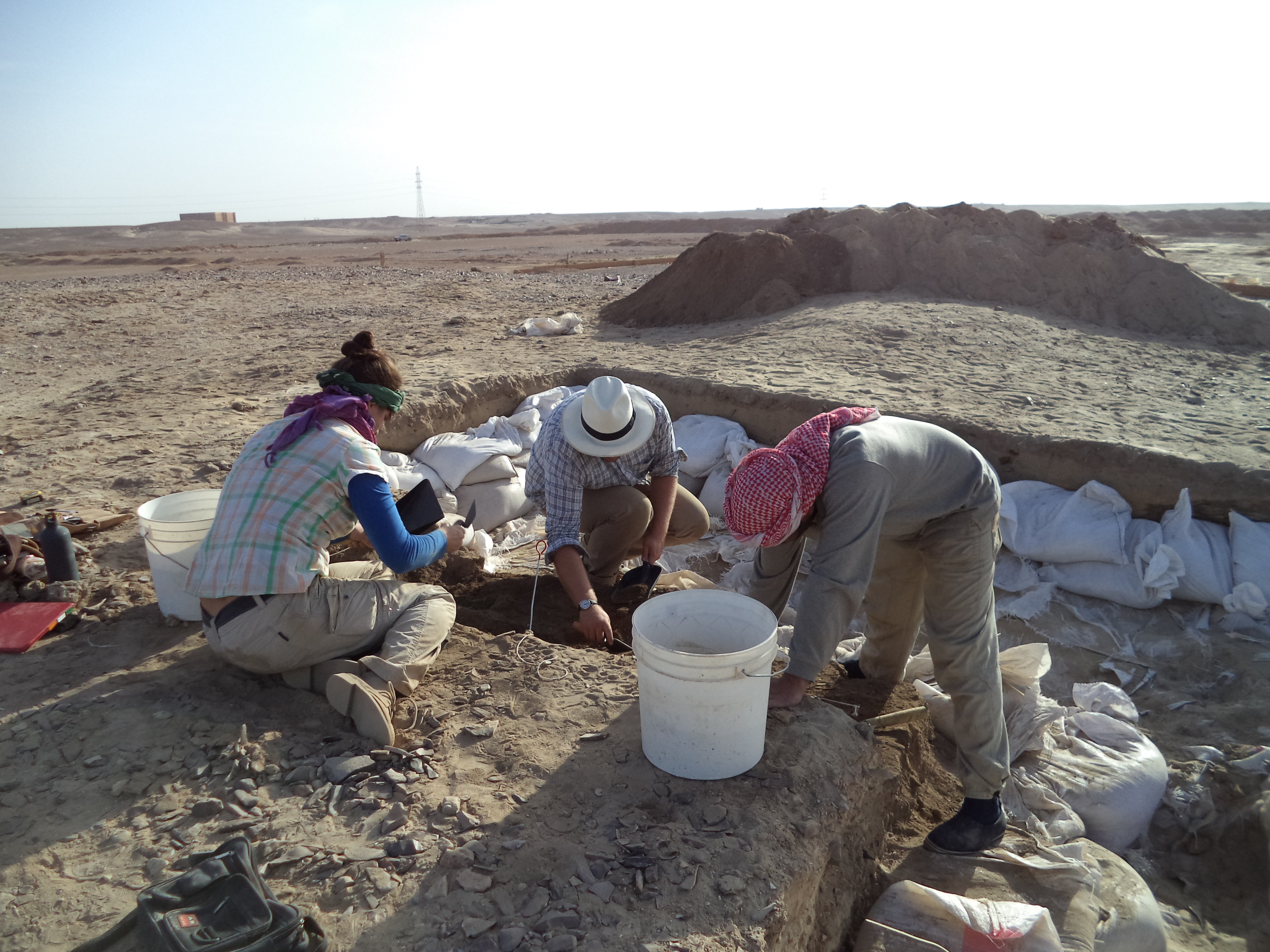
Excavation at Kharaneh IV is like a forensic investigation. But instead of a crime scene, we are trying to work out what happened at a camp site twenty thousand years ago, using the ephemeral traces that have survived in desert sand. In those circumstances, it is important to pay attention to the smallest detail. We peel back — with spoons and brushes — deposits that may only be centimetres thick, each capturing perhaps just a few weeks or months of human life, and compressed under the weight of thousands of years of subsequent activity on top of them. This has been a lot of fun as an excavator: we each dig a 1×1 m unit which is subdivided into 25×25 cm quadrants. Each one is an excavation in miniature, where we’re tasked with unpicking stratigraphic puzzles that at times, given the fragile and complex nature of the deposits, can be quite challenging.
This attention to detail ‘at the trowel’s edge’ (or spoon’s edge) is matched by a painstaking recording system. About half of our time on site is spent documenting the deposits we excavate in minute detail: their location, extent, and depth; how they relate to other parts of the site; the nature of the soil; and the precise coordinates of any artefacts on its surface. And as Adam wrote last week, this is matched by yet more time spent processing and analysing material back at the lab. All this information is recorded so that when the time comes, the big picture of activity at the site, and its important place in world prehistory, can be pieced together from the detail.

casey 2
everyone is enjoying the day off
Categories
Uncategorized

Laboratory Life

Guest post from Adam Allentuck (Postdoctoral Fellow, University College London, Website)

_DSC1073
Adam and Trine analyzing bones

The popular perception that archaeology begins and ends in the trenches is untrue. During fieldwork, excavators meticulously remove sediments, fill-out record sheets, measure and photograph features, collect artifacts, draw section plans, and perform other such painstaking work. Most importantly, excavation is discovery. But this is just the beginning of a process of discovery. At the end of every day of excavation at Kharaneh IV the lithics, animal bones, bulk sediment samples and records are brought back to the laboratory at our house in Azraq where cataloguing and processing occur. The time required to process, record and analyse archaeological finds is far greater than the time it takes to excavate them. For this reason, it’s import to highlight our efforts in the laboratory.

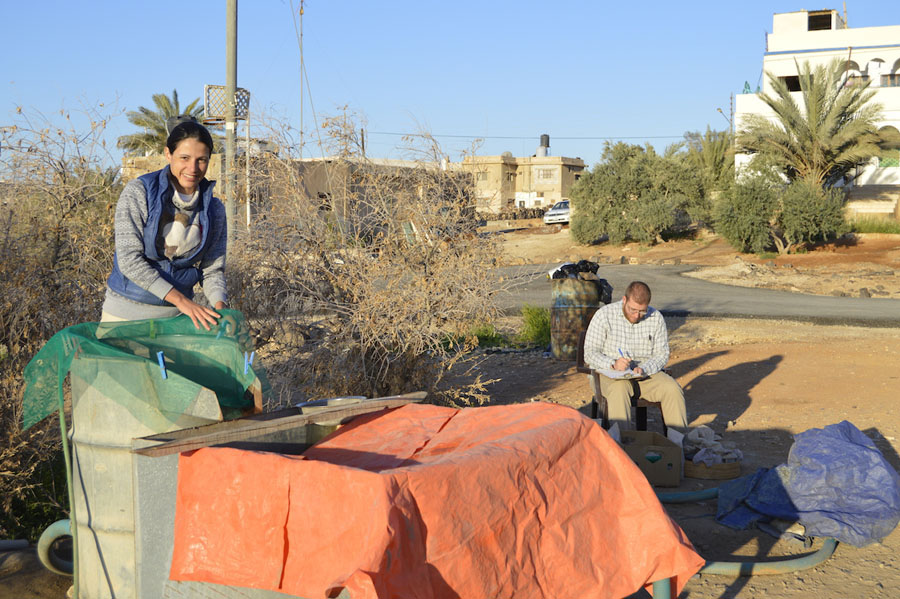
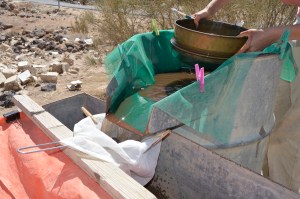
The work in the laboratory essentially picks up where the excavators stop. At Kharaneh IV we collect one hundred per cent of the undisturbed deposits in order recover even the smallest burnt seeds and the tiniest chipped stone debitage. This process, called flotation, involes a barrel tank and gentle flow of water that separates the sediments from the archaeological materials within. Dobrina, our flotation technician, expertly guides charcoal and other delicate botanicals that float through a spout on the rim of the tank into a fine mesh bag below. A coarser flat mesh within the tank catches the materials that sink. The sediments pass through the mesh and settle to the bottom of the tank. The end result is two samples – the flot that contains botanicals and the heavy fraction that contains lithics, bones, shell, and a few unwanted pebbles. Since Jordan is frequently in a state of water shortage, we recycle the overflowing water with a second tank and a pump.

flotation in action
Dobrina and Joe at flotation

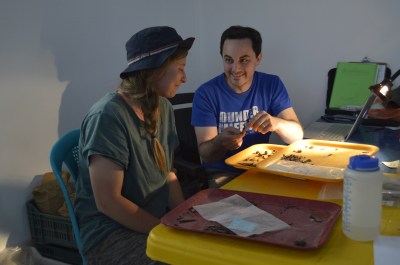
Once the various flotation samples are dried, Dobrina carefully transfers the botanicals into small vials and other lab staff separate lithics and bone. A further step is to divide the lithics into broad types, such as blades, flakes and debitage. Danielle will soon conduct detailed analyses of these lithic samples. and Animal bones are also sorted into broad categories such as diagnostics, tortoise shell, and long bone shafts. Trine, who is learning animal bone analysis, is showing a great aptitude for zooarchaeology.

flotation
Flotation in action!

In addition to managing the lab, my work is primarily focused on analysing faunal remains from Structure 1, which was excavated in 2010 and 2013, and floated and sorted this year. After Trine does the initial sorting of animal bones, I further refine categories and record the data in a spreadsheet. I record various types of data such as the anatomical element, animal taxon, body side, bone fusion, and butchery marks. I also record measurements of long bone fragment length and I take biometrical measurements, which will later be used to determine the ratios of male to female animals for the most abundant species. Gazelles are by far the most abundant taxon in most contexts. They’re distantly followed by a small wild equids (likely onager), hare, fox and tortoise. Less common animals from Kharaneh IV include aurochs, wolf or dog (notoriously difficult to tell apart), a small wild cat, ostrich, and various small birds. The faunal data generated from my work will help inform the environmental reconstruction and more immediately, inform our understanding of how Early Epipalaeolithic hunter-gatherers prepared food and organized their internal living spaces.

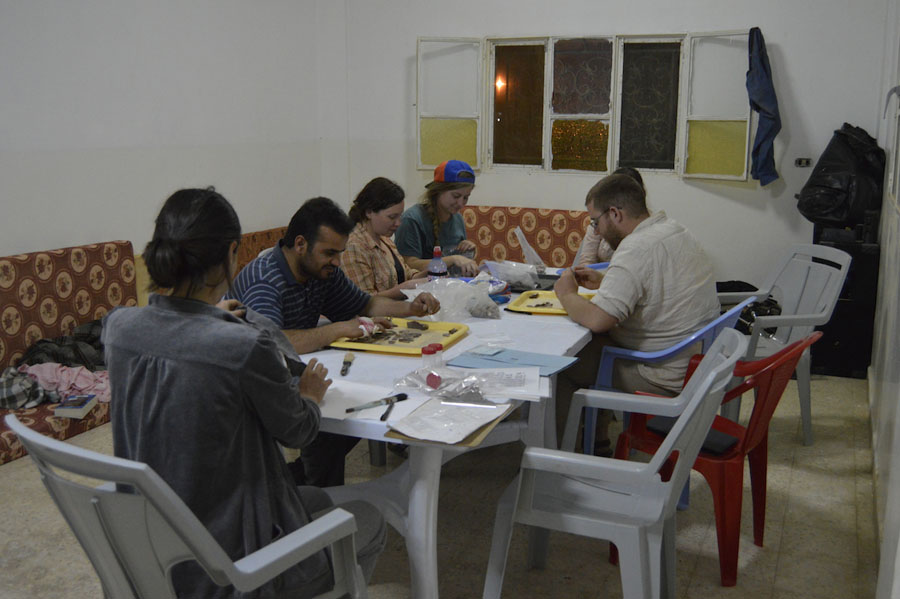
sorting lithics
Lithic sorting in the evenings

At Kharaneh IV, archaeological research is a multi-stage process managed through coordinated efforts among generalists and specialists. Our collaborative, multi-disciplinary endeavour requires cooperation among fieldworkers at the site and staff at the laboratory. As such, our discoveries are made as a team and at every step of the way.

Categories
Uncategorized

Week 2 at Kharaneh IV

Week two has come to a close! Amazingly we are now half-way through our field season. Excavations continue at Kharaneh IV, with Olivia, Trine, and Abdulkareem joining me to work on site. Meanwhile, Renata and Joe stayed back at the dig house to help with laboratory work and flotation with Adam and Dobrina.

We said goodbye to Adrian and Tom at the beginning of the week. They wrapped up most of the octocopter flying to capture the site with high-resolution photography. As well, they did some kite photography to get great images of the site and surrounding wadis at higher altitudes. This week Olivia will be finishing off the high-resolution photography with a camera on a pole (photos to come).

DSC00169
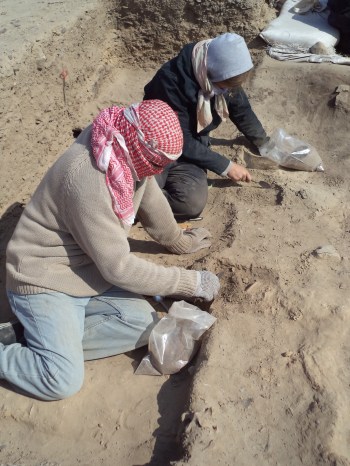
Abdulkareem and Trine excavating with spoons

On site we continued to excavate two 1×1 metre squares get to the level of Structure 2. Thankfully, by the end of the week we had reached the same level as the 2010 excavation areas, exposing the sediment just above the structure. At this point we gridded the excavation units into 25×25 centimetre squares for better horizontal control and began to excavate with spoons (a highly effective method for collecting sediments from small areas). In addition to point-proveniencing artifacts, the 25×25 cm excavation areas allow us to retain a high level of spatial control for the artifacts coming from flotation samples. The same strategy was used during the excavation of Structure 1 in 2013 and this will allow us to compare the distribution of artifacts and faunal remains between the two structures. The spatial distribution of materials within the structures will give us an understanding of how people organized their domestic space in the past. Excavations will continue next week to fully expose the surface of Structure 2 so that the distribution of artifacts can be mapped.

olivia and trine on site
Olivia and Trine working on site

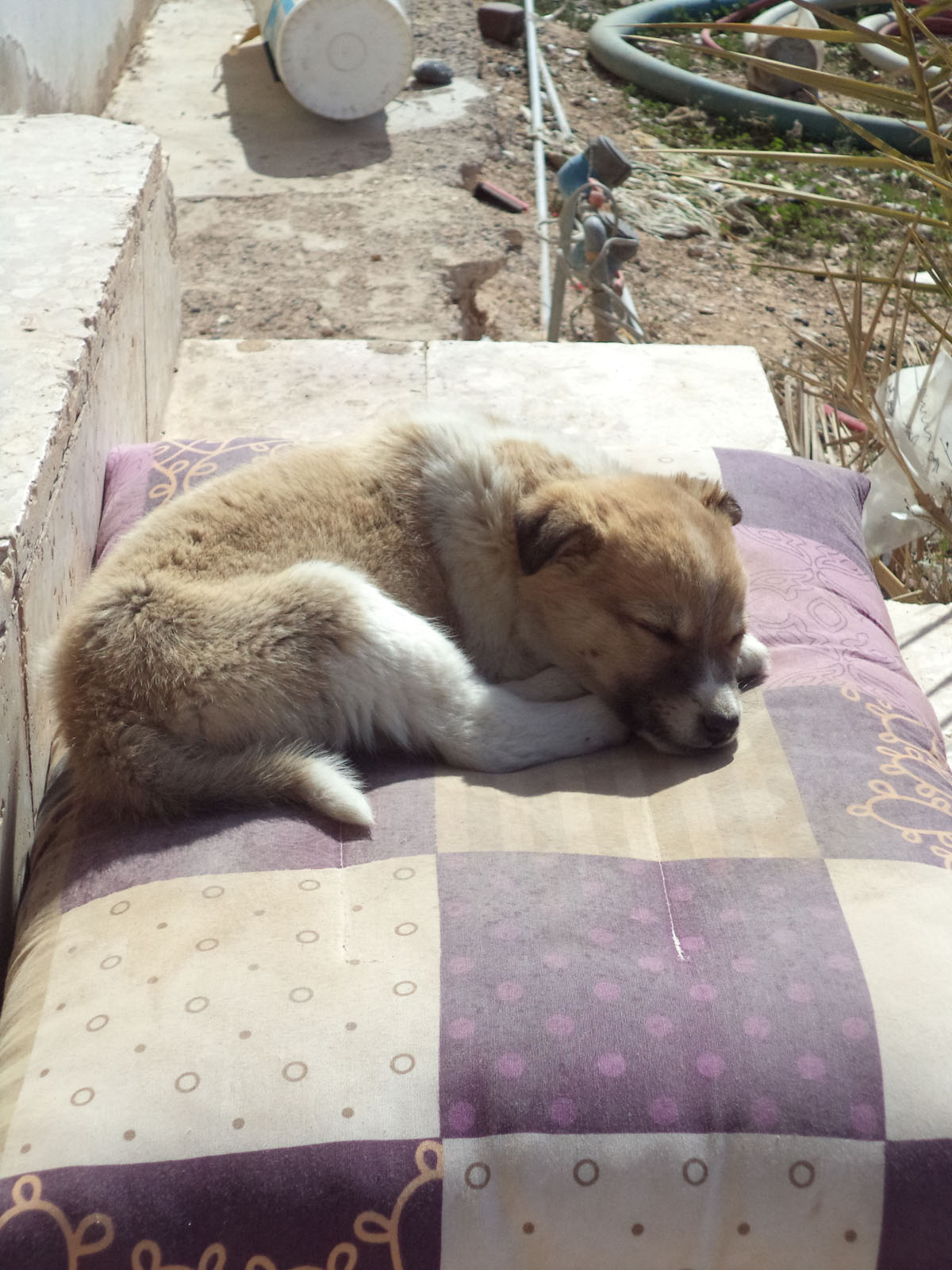
The week finished off with a day at the dig house working on lab work to catch up on lithic and faunal analysis. In addition, we have adopted an abandoned puppy who was wandering in the souk. He has now become an integral member of our team!

puppy
The newest member of the Kharaneh IV team
Categories
Uncategorized

Kharaneh IV 2015 excavations begin!

We just wrapped up Week 1 of the Kharaneh IV 2015 field season! It is good to be back in Azraq, this time in March when the weather is cooler (it even rained on site one day!). This year we are returning to one of our old excavation areas, Area B, to continue excavations that we had started in previous seasons. Back in 2010 we uncovered evidence for two hut structures but did not have time to fully excavate them during that field season (http://journals.plos.org/plosone/article?id=10.1371/journal.pone.0031447). So we returned in 2013 with a small crew to excavate Structure 1.  This year we are reopening Area B (the Early Epipalaeolithic Area) to expose, map, and excavate the second structure that we uncovered in 2010. In addition to the excavation, we are excited to have Adrian and Tom from the Fragmented Heritage Project (www.fragmentedhereitage.com) joining us. They are laser scanning the site and flying an octocopter to capture high resolution images of Kharaneh IV’s surface (and the millions and millions of lithics!). More blog posts on their work will be coming up.

Kharaneh IV
View of Kharaneh IV

This year’s team is composed of an international assortment including people from Canada, Jordan, the UK, Denmark, Bulgaria, and Brazil. This has led to a range dinner conversations analysing cultural eating habits from around the world. Their enthusiasm for lithics, bones, and flotation has made lab work lots of fun! This year we are splitting the team between the lab and the field, with half the crew working in the lab, half in the field, and then rotating them so that everyone has the opportunity to excavate.

wheeee.....
Octocopter flying over Kharaneh IV

The first day on site we unbackfilled Area B to get down to the level of the structure that we had exposed in 2010. We left these deposits covered with sandbags to protect them as we opened up two new excavation units to fully expose the hut. Abdulkareem, Joe, Renata, and I worked quickly to remove the upper disturbed sediments to expose the in situ deposits underneath. We are now excavating through good deposits and by the end of the week we started to expose what I believe is a bone midden uncovered in 2010. Hopefully we will be at the surface of the Structure 2 deposits by the middle of next week.

science!!
Unbackfilling on the first day (science!)

Meanwhile in the lab, Adam has been busy analysing fauna from Structure 1 that we excavated in 2013, with the help of Trine who has been sorting bones for him. Dobrina has been floating samples from Structure 1 and we hope to have most of them floated by the end of the season. Olivia has been dividing her time between helping in the lab and working with Fragmented Heritage to survey the site. In the afternoons we have all been sorting lithics, of which there seems to be an endless supply.

At the end of the week we took a much deserved break in Madaba. Rested and relaxed, we are excited to start week 2 of excavations tomorrow!

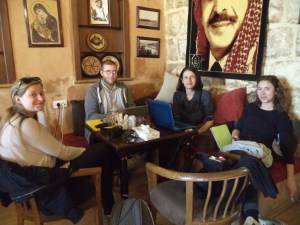
Crew relaxing/working in Madaba on the day off